Dental Bonding in Duluth, MN
Chips, gaps, and worn edges fixed in one visit, with tooth-colored composite shaped by hand and no enamel removed.
Dr. Camille Zelen, RN, DDS, AAACD, wrote the AACD's continuing education course on composite shaping, finishing, and polishing. Bonding is the skill it teaches.
Key highlights
- Dental bonding repairs or reshapes a tooth with tooth-colored composite resin.
- It fixes chips, small gaps, worn edges, and short teeth in one visit.
- Most bonding removes little or no enamel, so it's reversible.
- Research puts the ten-year success of front-tooth composite repairs at about 90 to 95%.
- Bonding is a hand skill. The dentist's technique decides how it looks and how long it lasts.
- It can stain over time, and it's easy to repair.
What is dental bonding?
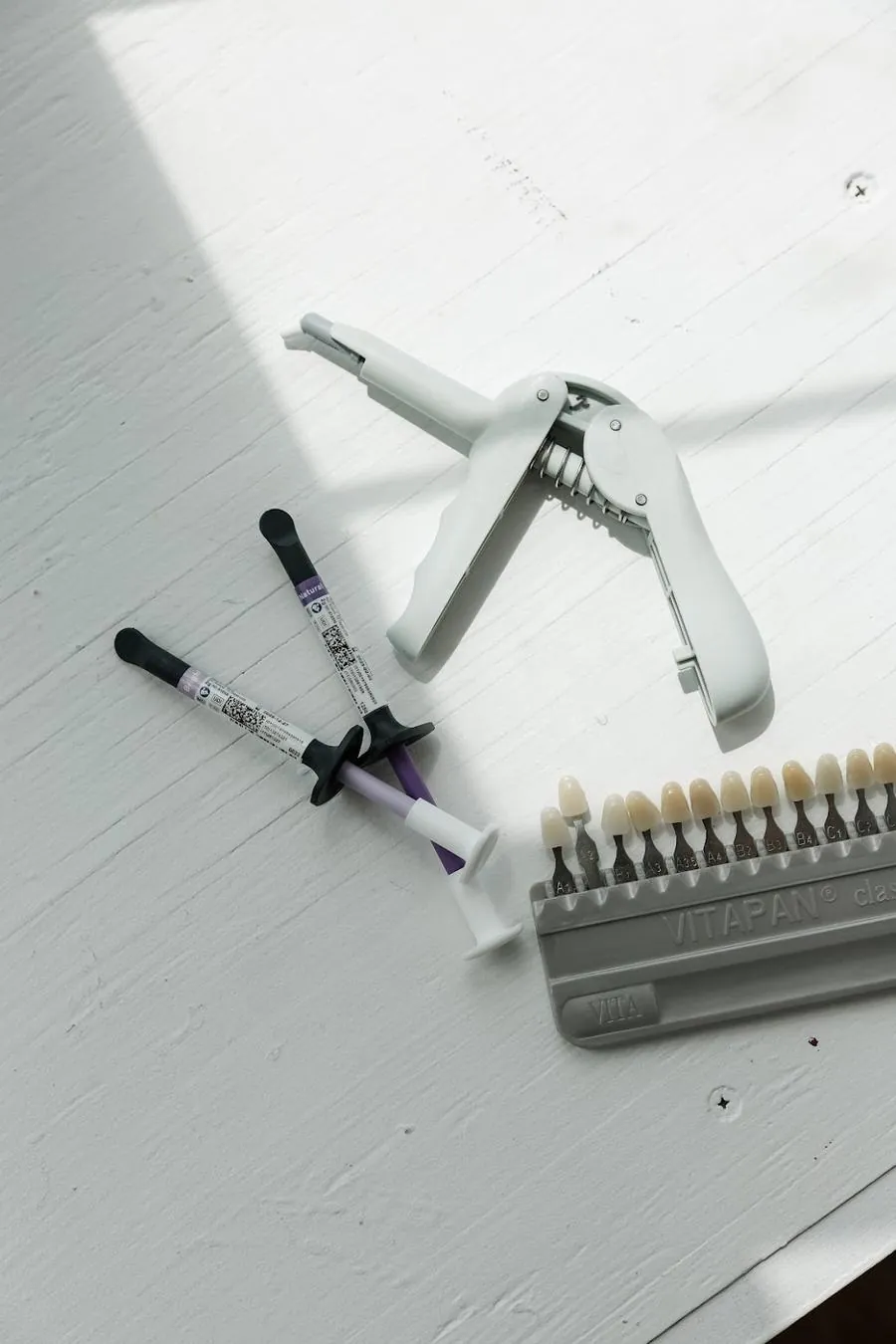
Dental bonding is a procedure that repairs or reshapes a tooth by applying tooth-colored composite resin, sculpting it by hand, hardening it with a light, and polishing it to match the tooth around it.
The composite is the same material we use for tooth-colored fillings. The difference is where it goes and how it's shaped. A filling fills a hole. Bonding builds a corner, closes a gap, or lengthens an edge, and the whole job is done freehand, in the chair, while you watch.
That's why bonding lives or dies on the dentist's hands.
Bonding vs. veneers vs. crowns
| Bonding | Porcelain veneers | Crowns | |
|---|---|---|---|
| Covers | Part of the tooth | The front of the tooth | The whole tooth |
| Enamel removed | Little to none | A thin layer | More, all around |
| Visits | One | Two or more | One (same-day) or two |
| Made by | The dentist, by hand | A master ceramist | Milled or a ceramist |
| Stain resistance | Can stain over years | Resists stain | Resists stain |
| Repair | Easy, in the chair | Usually replaced | Usually replaced |
| Best for | One to four teeth, small changes | Lasting change on several teeth | Broken or heavily filled teeth |
When the change is small and the tooth is healthy, bonding is the conservative answer. When the change is bigger or you want it to last twenty years without touch-ups, porcelain veneers take over.
What bonding can fix
The most common case. We rebuild the corner to match the other side, in one visit, often with no numbing.
Composite added to the edges of both teeth closes the space. The trick is keeping the teeth from looking wide.
Grinding flattens front teeth. Bonding lengthens them back to where they were. A night guard protects the work.
Small lateral incisors are common. Bonding brings them into proportion with the teeth beside them.
A white spot or a dark patch that whitening didn't lift can be covered with a thin layer.
Receding gums leave notches at the gumline. Composite covers them and stops the sensitivity.
Why technique matters more than material
Every dentist buys composite from the same handful of companies. The material isn't the difference.
What differs is how it's layered, shaped, and polished. Natural enamel is translucent at the edge and more opaque near the gum. A bonded tooth that uses one shade in one layer looks flat. One built in layers, with the shape carved to match its neighbor and the surface polished to the same texture, disappears.
Dr. Zelen teaches this. The AACD continuing education course "Composite 1, 2, 3: Shape, Finish, Polish" is Dr. Zelen's, and so is a Journal of Cosmetic Dentistry article on rebuilding a broken front-tooth corner, the Class IV restoration. Both are about the part of bonding that happens after the composite is on the tooth.
Dr. Zelen's standard for every restoration:
"Not doing harm and being conservative and protecting tooth structure... work that's going to last them a long time, but look very natural and be very beautiful."

Is bonding right for you?
Bonding is likely the answer
- One to four front teeth with chips, gaps, or worn edges
- You want to keep your enamel
- You want it done today
Let's talk it through first
- Six or more teeth, where veneers may be simpler
- Heavy grinding, where a night guard joins the plan
- Crowding behind the chip, where Invisalign first gives a better result
Something else fits better
- A tooth broken below the gum, which needs a crown
- Deep gray staining across all teeth
- Active decay or gum disease, treated first
What we do, and what we don't
What we do
We bond chips, gaps, edges, and spots with layered composite, shaped by hand and polished to match. We do it in one visit. We plan it with your bite so the new edge doesn't take more force than it should.
What we don't
We don't bond over decay or on gums that aren't healthy. We don't promise bonding will last as long as porcelain, because it won't. And we won't bond six or eight teeth when veneers would serve you better. Bonding is the conservative tool. We use it where it fits.
Your bonding visit, step by step
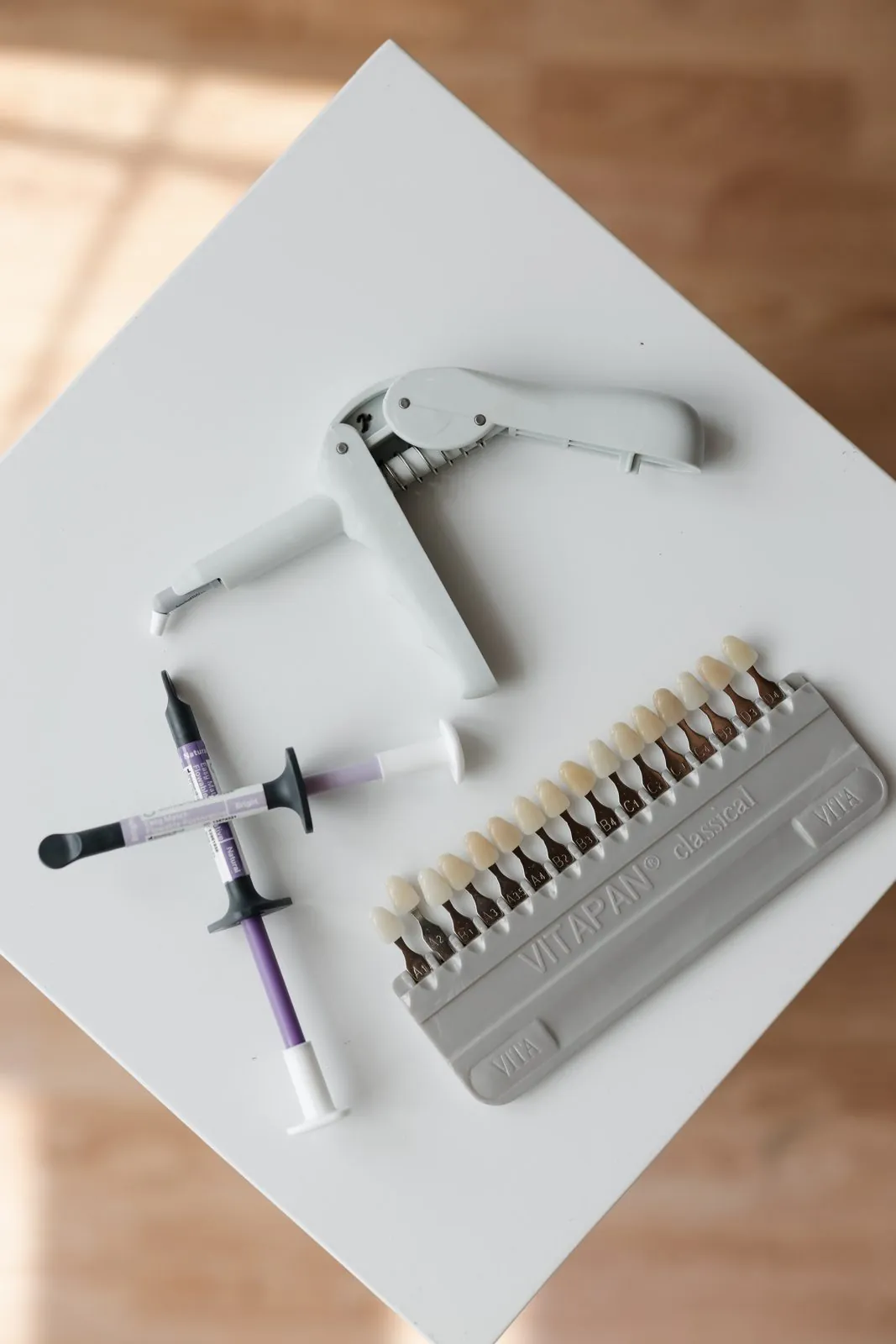
- 01Shade and plan.We match the composite to your tooth in natural light and decide the shape. For a chip, we copy the other side. For a gap, we plan how much each tooth gets.
- 02Numbing, sometimes.Most cosmetic bonding needs no numbing. If we're covering a sensitive root or working near a nerve, we numb.
- 03Prepare the surface.We lightly roughen the enamel and apply a bonding agent so the composite grips. Little or no enamel comes off.
- 04Layer and shape.Composite goes on in thin layers, each one hardened with a blue light. Dr. Zelen shapes as the layers build. This is the part that takes skill, and it's the part you can watch.
- 05Finish and polish.We refine the shape, check your bite, and polish to match the texture of the tooth next to it. A good polish is what keeps bonding from staining.
One tooth takes about 30 to 60 minutes. You eat normally the same day.
How long bonding lasts
Well-placed bonding lasts years. A meta-analysis in Dental Materials put the ten-year success rate at about 95% for small front-tooth repairs and 90% for rebuilt corners. Fracture was the main reason for failure, and bigger repairs broke more often than small ones.
What shortens it
Biting nails, chewing ice, opening packages with your teeth. Grinding without a night guard. Coffee and wine without rinsing.
What extends it
A night guard if you grind. Regular cleanings, where we re-polish the bonding. A quick repair when a corner chips, instead of waiting.
Caring for bonded teeth
- Brush and floss like normal.
- Rinse after coffee, tea, or wine.
- Skip ice, nails, and pens.
- Wear your night guard.
- Whiten first if you plan to. Bonding won't change color later.
Bonding as part of a bigger plan
Bonding often finishes a plan rather than starting one.
After whitening, we match the composite to the new shade. After Invisalign, a small edge or gap that aligners couldn't close gets bonded. In a smile makeover, bonding handles the two or three teeth that don't need porcelain.
Bonding results
Drag the handle to compare. Cases are photographed by the practice with the same camera at the same settings.
Bonding before-and-after pairs coming from the practice
Cost
Bonding is priced per tooth and depends on how much composite and shaping the tooth needs. A small chip costs less than a rebuilt corner. You get the cost in writing at your visit, and bonding is usually the least expensive cosmetic option.
Insurance often covers bonding when it repairs a broken tooth, and rarely when it's cosmetic. We file claims on your behalf and offer interest-free CareCredit plans. Financing options
Dental bonding FAQ
Does dental bonding hurt?
Dental bonding doesn't hurt. Most cosmetic bonding needs no numbing. We numb when we work near a nerve or an exposed root.
How long does bonding last?
Front-tooth bonding has a ten-year success rate of about 90 to 95% in research. A night guard and regular polishing extend it.
Can bonding fix a chipped front tooth in one visit?
A chipped front tooth can be rebuilt with bonding in one visit, usually in under an hour.
Will the bonding match my teeth?
Bonding matches when it's layered and polished to the texture of the tooth next to it. That's the part of the technique Dr. Zelen teaches.
Does bonding stain?
Composite can pick up stain over years, especially with coffee and wine. A good polish slows it, and we re-polish at cleanings.
Bonding or veneers?
Bonding fits one to four teeth with small changes and keeps your enamel. Veneers fit bigger changes on more teeth and resist stain longer.
Can I whiten after bonding?
Whitening doesn't change bonding. If you want whiter teeth, we whiten first and match the composite to your new shade.
Where can I get dental bonding near me in the Duluth area?
Mount Royal Dental does composite bonding at our office on Woodland Avenue in Duluth, MN. Patients come from Hermantown, Superior, Two Harbors, and Cloquet. Call (218) 464-5222.
Dental bonding on Woodland Avenue
Mount Royal Dental sits at 1624 Woodland Avenue, Duluth, MN 55803, at the corner of Woodland and St. Marie, next to the Mount Royal Shopping Center near UMD.
Monday 8 to 3, Tuesday through Thursday 8 to 4:30, Friday closed. Call (218) 464-5222.