Sleep Apnea and Snoring Treatment in Duluth, MN
Custom oral appliances for sleep apnea. Solea Sleep laser treatment for snoring. Both without a mask.
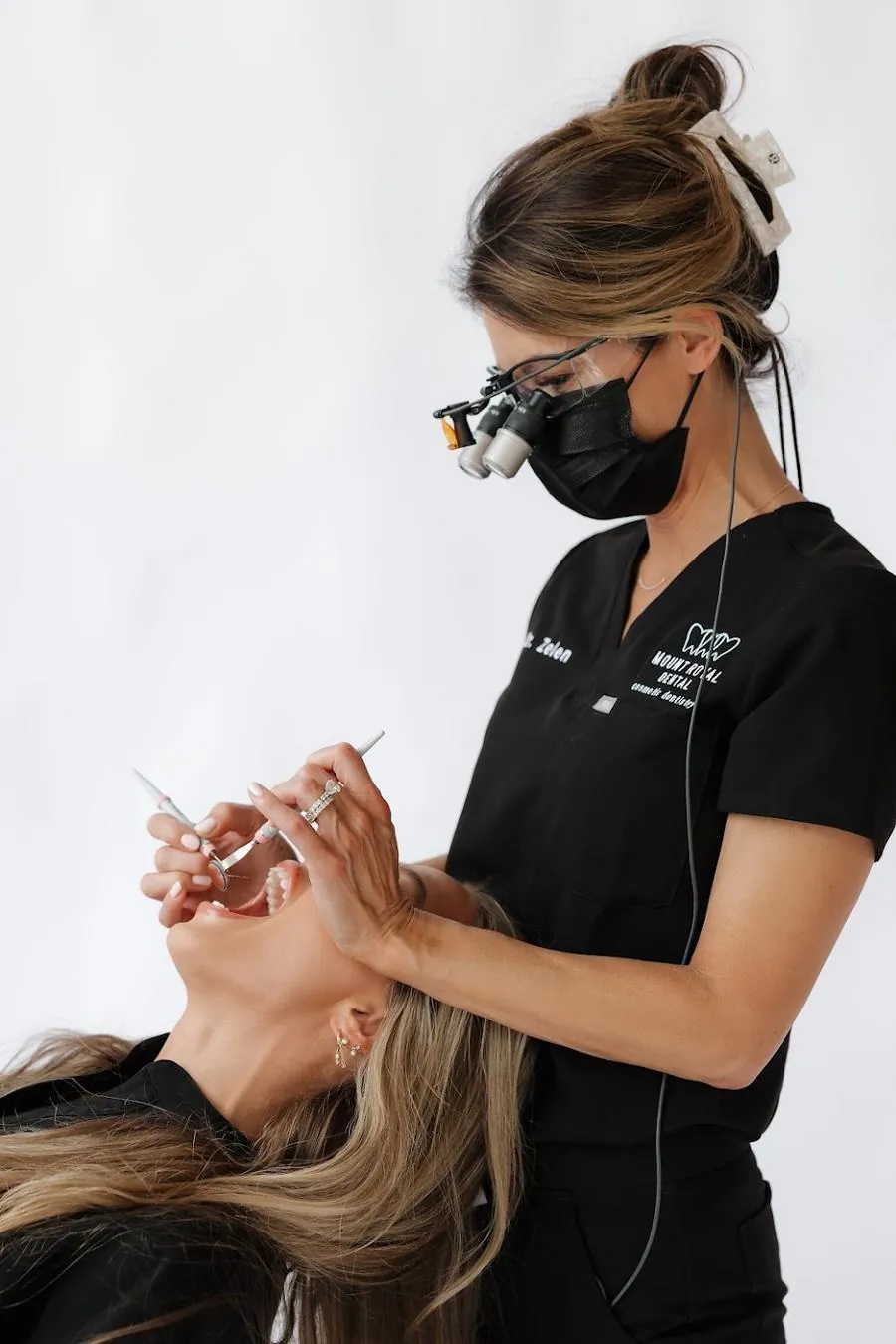
Dr. Camille Zelen, RN, DDS, AAACD, works with your sleep physician to treat the airway from the dental side.
Key highlights
- Snoring and sleep apnea are different problems. We treat both.
- A custom oral appliance holds the jaw forward so the airway stays open.
- Sleep physicians and dentists jointly recommend oral appliances for people who can't tolerate CPAP.
- Solea Sleep is a five-minute laser treatment that tightens the soft palate to reduce snoring.
- Solea Sleep treats snoring. It does not treat sleep apnea.
- A sleep physician diagnoses. We treat.
Snoring vs. sleep apnea
Snoring is noise. Sleep apnea is a medical condition where breathing stops and starts during sleep.
Most snoring comes from the soft palate vibrating as air passes. It's loud, and it wrecks a partner's sleep, but on its own it isn't dangerous.
Obstructive sleep apnea is different. The airway collapses, oxygen drops, and the brain jolts you awake just enough to breathe. That can happen dozens of times an hour. Over years, it raises the risk of high blood pressure, heart disease, and daytime accidents.
Snoring is often the first sign of apnea. That's why a sleep physician needs to sort out which one you have.
Signs you may have sleep apnea
Red flags
- Loud snoring most nights
- Gasping or choking in your sleep
- Waking up tired after a full night
- Morning headaches
- Dry mouth on waking
- Falling asleep during the day
- Grinding or clenching at night
- High blood pressure that's hard to control
Two or more of these mean it's time for a sleep study. We can help you get one.
Treatment options compared
| Treatment | Treats | How it works | Where |
|---|---|---|---|
| CPAP | Sleep apnea | A mask pushes air to keep the airway open | Sleep physician |
| Custom oral appliance | Sleep apnea and snoring | Holds the lower jaw forward during sleep | Our office, with a physician's prescription |
| Solea Sleep | Snoring only | Laser tightens the soft palate | Our office |
| Myofunctional therapy | Snoring and mild apnea, as an add-on | Strengthens tongue and throat muscles | Our office |
| Palatal expansion | Narrow airway | Widens the upper jaw and nasal floor | Our office |
| Surgery | Severe cases | Removes or repositions tissue | ENT or surgeon |
CPAP is the first-line treatment for sleep apnea. The American Academy of Sleep Medicine and the American Academy of Dental Sleep Medicine recommend oral appliances for adults who can't tolerate CPAP or prefer an alternative. Many people fall into that second group.
How a dentist treats sleep apnea
A dentist can't diagnose sleep apnea. That takes a sleep study ordered by a physician.
What a dentist can do is build the appliance. The joint guideline says the physician prescribes, and a qualified dentist makes a custom, adjustable appliance and follows up on how your teeth and bite respond. That's the arrangement we use.
If you already have a diagnosis, bring your sleep study. If you don't, we'll help you get tested and send our findings to your physician.
Oral appliances for sleep apnea
An oral appliance looks like a sports mouthguard in two pieces. It holds your lower jaw slightly forward while you sleep. That pulls the tongue forward too, and the airway stays open. We make yours from a digital scan of your teeth. It fits only you. Small adjustments move the jaw forward in steps until your breathing improves.
People with mild to moderate apnea. People who tried CPAP and gave up on the mask, the hose, or the noise. Travelers who want something that fits in a pocket.
People with severe apnea usually start with CPAP, because it's more effective at keeping oxygen levels up. An appliance can still be an option if CPAP doesn't work out, with your physician's agreement.
The first week feels strange. Your jaw may be sore in the morning. That fades. Most people adjust within two weeks and sleep better than they have in years.
Solea Sleep for snoring
Solea Sleep is a laser treatment that tightens the soft palate so it vibrates less. The soft palate is the flap at the back of the roof of your mouth. In most snorers, it's loose and it flutters. The Solea laser warms the collagen deep in the palate, which makes the tissue firmer. Firmer tissue vibrates less.
We spray a numbing solution on the palate. No needles. The laser pass takes about five minutes. You can eat, drink, and go back to work right after.
Results typically last six to nine months, and some patients go longer. A short touch-up visit renews the effect. Some people get a second pass within the first month for more tightening.
Solea Sleep treats palatal snoring. It does not treat sleep apnea. If your snoring comes with gasping, daytime sleepiness, or a known apnea diagnosis, you need a sleep study and a real apnea treatment first. Snoring can still be treated alongside it.
The Solea laser is FDA-cleared for soft tissue procedures in the mouth. Solea Sleep is one use of it.
Why we also look at the tongue and the palate
An appliance or a laser treats the symptom tonight. The shape of your mouth decides whether it comes back.
The floor of the nose sits on the roof of the mouth. A narrow palate means a narrow nasal airway. In adults, MARPE palatal expansion can widen it.
A low, weak tongue falls back during sleep. Our hygienists run Duluth's first myofunctional therapy program. A 2015 review in the journal Sleep found therapy cut apnea severity by about half in adults.
A tie holds the tongue low. Releasing it, with therapy, helps the tongue rest where it belongs.
Most patients don't need all of this. The evaluation tells us which pieces matter for you.
Is this the right place to start?
Start here
- You have a sleep apnea diagnosis and can't tolerate CPAP
- You snore, your sleep study was clear, and you want it to stop
- You have a prescription for an oral appliance
Let's talk it through first
- You snore and don't know whether it's apnea
- Your partner says you stop breathing
- A child who snores or breathes through the mouth
See a physician first
- Gasping, choking, or severe daytime sleepiness with no diagnosis
- Severe apnea that hasn't been tried on CPAP
- Heart or lung conditions that need medical management
The middle column still starts with a call to us. We'll point you to a sleep study and see you after.
What we do, and what we don't
What we do
We make custom oral appliances for sleep apnea with a physician's prescription. We treat snoring with Solea Sleep. We widen narrow palates and retrain tongue posture with myofunctional therapy. We send findings to your physician and follow up on your bite.
What we don't
We don't diagnose sleep apnea. We don't sell a snoring treatment to someone who needs an apnea workup. And we don't claim an appliance replaces CPAP for everyone. For severe apnea, CPAP works better, and we say so.
Getting started, step by step
- 01Consultation.You tell us about your sleep, your snoring, and anything you've tried. Bring your sleep study if you have one. We look at your airway, palate, tongue, and bite.
- 02Sleep study, if needed.No diagnosis yet? We refer you for a sleep study. Many can be done at home. Your physician reads the results.
- 03The plan.Based on the diagnosis, we recommend an appliance, Solea Sleep, therapy, expansion, or a mix. You get it in writing with costs.
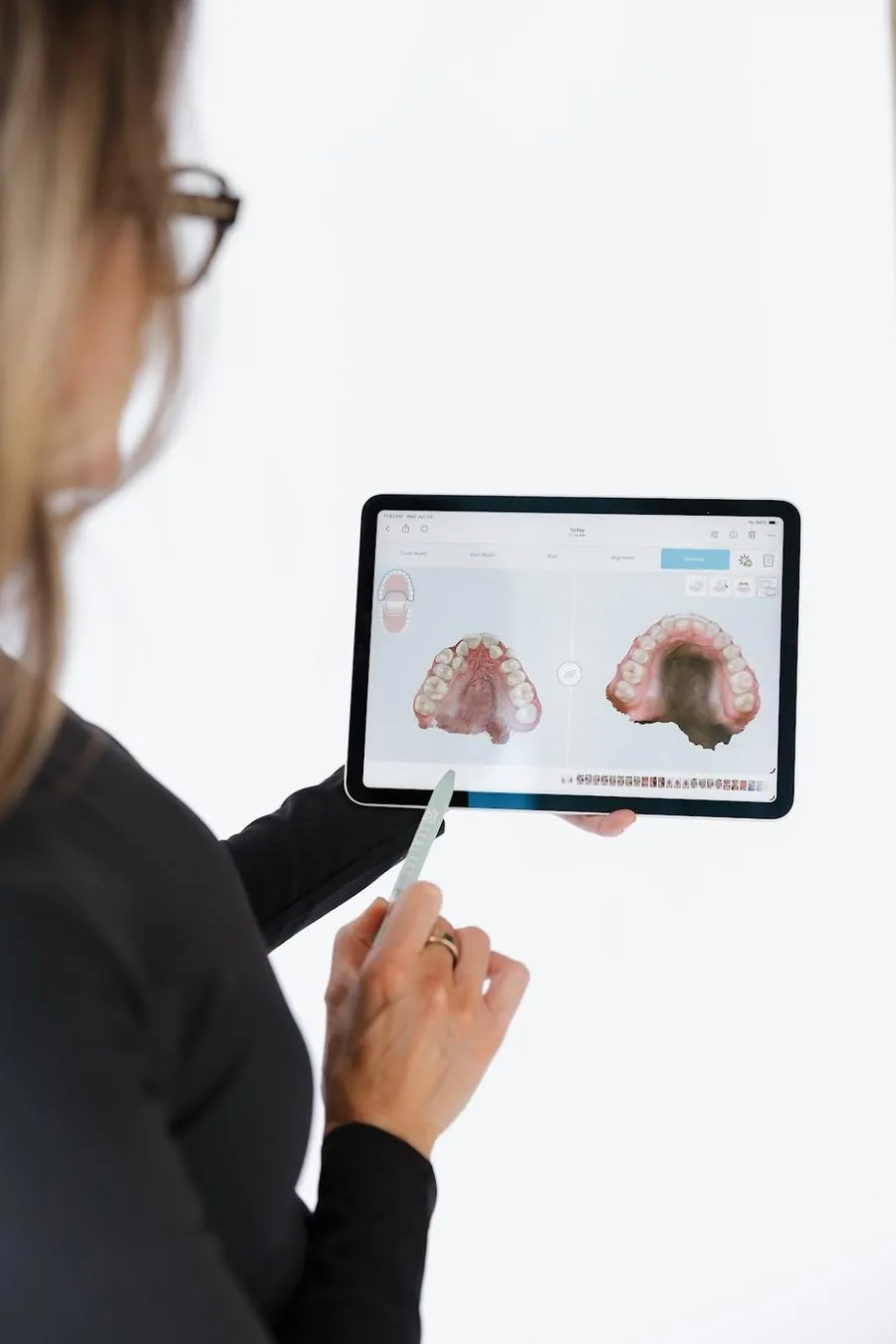
- 04Scan and fitting.For an appliance, we scan your teeth and fit it a few weeks later. For Solea Sleep, treatment can happen the same day as the consultation.
- 05Adjusting.We move the appliance forward in small steps until you breathe and sleep better. Your physician may order a follow-up study to confirm.
- 06Checkups.We check your bite and the appliance at regular visits. Solea Sleep patients come back for a touch-up when snoring creeps back.
Living with an oral appliance
- Brush it every morning with a soft brush and mild soap.
- Expect jaw soreness the first week. It fades.
- Do the morning bite exercise we show you. It resets your jaw.
- Bring it to every dental visit.
- Replace it when it wears, usually after a few years.
Cost and insurance
Oral appliances for diagnosed sleep apnea are often covered by medical insurance, not dental. Solea Sleep for snoring is usually paid out of pocket. Myofunctional therapy is priced by program.
You get every cost in writing. We file claims on your behalf and offer interest-free CareCredit plans. Financing options
Sleep apnea and snoring FAQ
Can a dentist treat sleep apnea?
A dentist can treat sleep apnea with a custom oral appliance once a sleep physician makes the diagnosis and prescribes it. We work with your physician throughout.
Is an oral appliance as good as CPAP?
CPAP is more effective at keeping oxygen levels up, but many people don't use it. An oral appliance that you wear every night often beats a CPAP that sits in the closet.
Does Solea Sleep treat sleep apnea?
Solea Sleep treats snoring from the soft palate. It does not treat sleep apnea. Apnea needs a sleep study and a treatment like CPAP or an oral appliance.
Does Solea Sleep hurt?
Solea Sleep uses a numbing spray and no needles. Most patients feel warmth and go back to normal activity right away.
How long does Solea Sleep last?
Results typically last six to nine months, and some patients go a year or more. A touch-up visit renews the effect.
Do I need a sleep study?
You need a sleep study if you have signs of sleep apnea, like gasping or daytime sleepiness. We can refer you, and many studies can be done at home.
Can kids be treated for snoring?
Kids who snore are often mouth breathers with a narrow palate. We treat that with expansion and myofunctional therapy, and we work with your pediatrician.
Where can I find a sleep apnea dentist near me in the Duluth area?
Mount Royal Dental provides custom oral appliances and Solea Sleep snoring treatment at our office on Woodland Avenue in Duluth, MN. Patients come from Hermantown, Superior, Two Harbors, and Cloquet. Call (218) 464-5222.
Sleep and snoring care on Woodland Avenue
Mount Royal Dental sits at 1624 Woodland Avenue, Duluth, MN 55803, at the corner of Woodland and St. Marie, next to the Mount Royal Shopping Center near UMD.
Monday 8 to 3, Tuesday through Thursday 8 to 4:30, Friday closed. Call (218) 464-5222.