Dental Bridges in Duluth, MN
A fixed tooth replacement anchored to the teeth beside the gap. No surgery, done in a few weeks.
Mount Royal Dental makes bridges that match your other teeth, and tells you plainly when an implant would serve you better.

Key highlights
- A dental bridge fills a gap with a false tooth held by crowns on the neighboring teeth.
- It's fixed. You don't take it out.
- It fits best when the neighbors already need crowns, or when surgery isn't an option.
- Pooled studies put conventional bridges at 93.8% survival at five years and 89.2% at ten.
- The anchor teeth take the load, so they need to be strong and healthy.
- Flossing under a bridge is the habit that makes it last.
What is a dental bridge?
A dental bridge is a fixed replacement for one or more missing teeth, made of a false tooth joined to crowns that sit on the natural teeth on either side of the gap.
Picture three teeth fused into one piece. The two on the ends are crowns that cap your real teeth. The one in the middle floats over the gap. We cement the whole piece in place, and it stays.
Bridge vs. implant vs. partial denture
| Bridge | Implant | Partial denture | |
|---|---|---|---|
| Fixed or removable | Fixed | Fixed | Removable |
| Surgery | No | Yes | No |
| Affects neighbors | Both get crowned | Untouched | Clasps rest on them |
| Keeps bone at the gap | No | Yes | No |
| Time to finish | Two to three weeks | Several months | A few weeks |
| Flossing | Threader or water flosser | Normal | Remove and clean |
| Ten-year survival | About 89% | About 89% for a single crown | Lower; relines needed |
Survival figures are from a systematic review in Clinical Oral Implants Research that pooled 5- and 10-year outcomes across restoration types. Bridges and implant crowns land within a fraction of a point of each other at ten years. The difference is what fails: decay in the anchor teeth for bridges, parts wear for implants.
Types of bridges
Crowns on both sides of the gap, false tooth in the middle. The standard. Works for one to three missing teeth in a row.
Anchored on one side only. Used where there's no tooth on the other side. Lower survival in studies, so we use it sparingly and never on back teeth that take heavy chewing.
A false tooth with thin wings bonded to the backs of the neighbors. Little drilling. Good for a front tooth in a light bite, or as a long-term temporary while a young patient waits for an implant. The same review found a 65% ten-year survival, so it's a specific tool for specific cases.
Two implants hold a bridge over three or four missing teeth. No natural teeth touched. The strongest option for a longer gap. Dental implants
When a bridge is the better choice
Implants get most of the attention. A bridge beats one in four situations.
Big old fillings, cracks, or root canals on both sides. Crowning them was coming anyway. The bridge fills the gap for the price of the third tooth.
Health conditions, blood thinners, or a firm no to surgery. A bridge needs none.
Grafting can rebuild it, but it adds months and cost. A bridge doesn't care about bone.
An implant takes months to heal. A bridge is done in two or three visits.
Is a bridge right for you?
A bridge is likely the answer
- One to three missing teeth with strong, healthy, or already-crowned neighbors
- Surgery is off the table
- You need a fixed tooth in weeks
Let's talk it through first
- A gap of four or more, where an implant bridge is stronger
- A front tooth in a young patient, where a Maryland bridge may hold until growth stops
- Heavy grinding, where a night guard joins the plan
An implant fits better
- One missing tooth with untouched, healthy neighbors
- A back molar with no tooth behind it
- Anchor teeth with gum disease or short roots
What we do, and what we don't
What we do
We make traditional, cantilever, Maryland, and implant-supported bridges. Front-tooth bridges go to a master ceramist. We check the anchor teeth on x-rays and in the chair, and we fit a night guard when grinding would threaten the bridge.
What we don't
We don't anchor a bridge on a tooth with gum disease, a short root, or a crack. A bridge is only as strong as its weakest anchor. And we don't crown two healthy teeth to fill a gap an implant would fill without touching them. We'll say so.
Getting a bridge, step by step
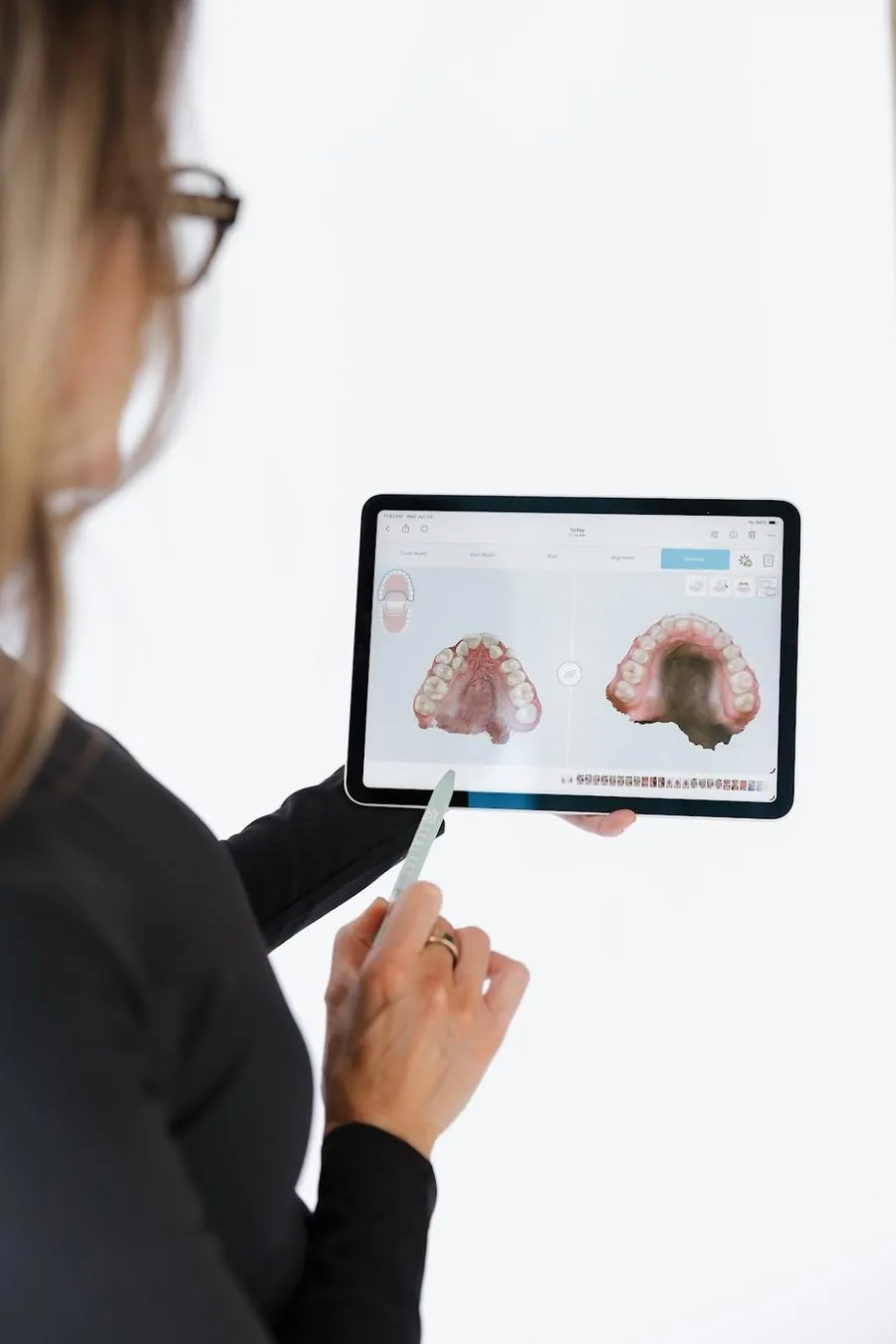
- 01Consultation.We check the anchor teeth, the gap, your bite, and your gums. We compare bridge and implant for your mouth. Cost in writing.
- 02Preparation.We numb the area and shape the anchor teeth for crowns. We scan, choose the shade, and place a temporary bridge the same visit. About 90 minutes.
- 03The lab.A ceramist builds the bridge from the scan. Two to three weeks. You eat and smile on the temporary meanwhile.
- 04Fitting.We try the bridge in, check the fit, the contacts, and the bite, and adjust. For a front bridge, you check the shade in daylight. Then we cement it.
- 05Follow-up.A short visit to check the bite and show you how to floss under it.
Living with a bridge
- Floss under the false tooth every day with a floss threader or a water flosser. Food that sits there decays the anchors.
- Brush the gumline around the crowns.
- Wear your night guard if you grind.
- Skip ice and hard candy.
- Keep your cleanings. We check the edges of the crowns every visit.
How long bridges last
Conventional bridges survive at about 94% at five years and 89% at ten in pooled studies. Many go longer.
What ends a bridge early
Decay creeping under a crown edge, because the area under the false tooth wasn't flossed. An anchor tooth that needs a root canal. Grinding without a guard.
What extends it
Daily flossing under it, the night guard, and cleanings where we catch a soft edge early.
Replacing an old bridge
Bridges from the 1990s and 2000s often had metal under the porcelain. They show a dark line at the gum and the porcelain chips.
When an old bridge fails, we look at the anchor teeth first. If they're sound, a new ceramic bridge goes on. If one anchor is failing, that's the moment to talk about implants, because the bridge can't be rebuilt on a bad tooth.
Cost and insurance
Bridge cost depends on how many teeth it spans and whether a ceramist builds it. A three-unit bridge is priced like three crowns. You get the number in writing.
Most dental plans cover a portion of bridges. We file claims on your behalf and offer interest-free CareCredit plans. Financing options
Dental bridges FAQ
Is a bridge better than an implant?
A bridge is better when the neighboring teeth already need crowns, when surgery isn't an option, or when you need a fixed tooth in weeks. An implant is better for a single gap with healthy neighbors.
How long does a dental bridge last?
Dental bridges survive at about 89% at ten years in pooled studies, and many last longer with daily flossing underneath and a night guard.
Does getting a bridge hurt?
Getting a bridge doesn't hurt. The anchor teeth are numbed for preparation, and sensitivity for a few days afterward is normal.
How many visits does a bridge take?
A bridge takes two to three visits over two to three weeks, with a temporary bridge in between.
Can a bridge replace a front tooth?
A bridge can replace a front tooth, and a ceramist layers the porcelain so it matches. A Maryland bridge is an option when the neighbors are healthy and the bite is light.
How do I clean under a bridge?
Clean under a bridge daily with a floss threader or a water flosser. We show you at the fitting visit.
Where can I get a dental bridge near me in the Duluth area?
Mount Royal Dental makes dental bridges at our office on Woodland Avenue in Duluth, MN. Patients come from Hermantown, Superior, Two Harbors, and Cloquet. Call (218) 464-5222.
Dental bridges on Woodland Avenue
Mount Royal Dental sits at 1624 Woodland Avenue, Duluth, MN 55803, at the corner of Woodland and St. Marie, next to the Mount Royal Shopping Center near UMD.
Monday 8 to 3, Tuesday through Thursday 8 to 4:30, Friday closed. Call (218) 464-5222.